
Contents
Start with a repeatable operation
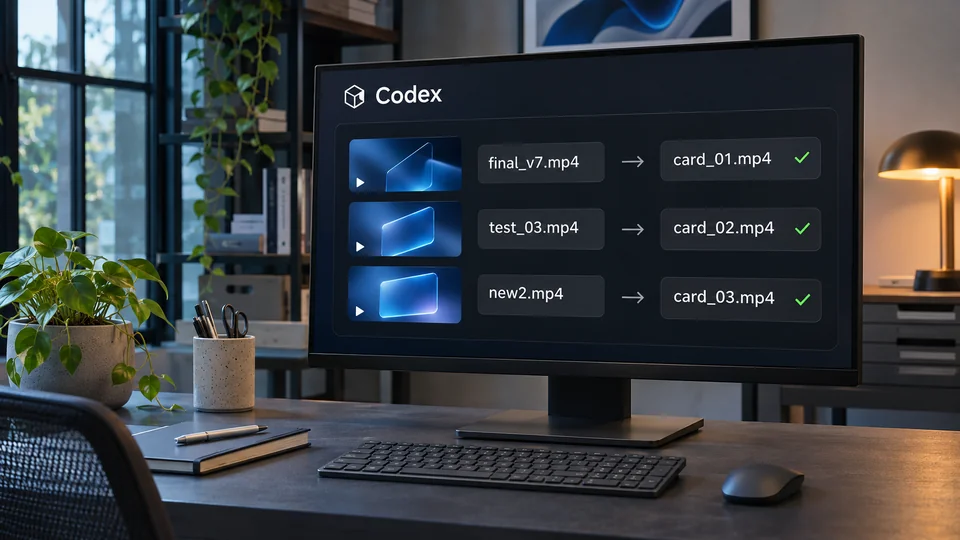
Codex is OpenAI’s tool for working with code. It can help inspect projects, make changes and run checks in an available environment. For a designer, a practical first task might be preparing exported files or building a small interactive prototype.
The important condition is that the result can be described precisely. “Organise my project” leaves too many decisions open. Renaming a copy of a numbered image sequence is narrower: you can specify the order, naming pattern and information that must be preserved.
Define the preview before the change
I have a copy of a folder containing PNG frames. They need names in the form shot_001.png, shot_002.png and so on. First show the proposed mapping without changing files. Handle name conflicts and explain how to check the order and restore the original names from the mapping.
This request includes a preview because ordering is easy to misunderstand. Alphabetical sorting may not match frame order. A small sample makes the rule visible before the operation is applied to a larger set.
Check behaviour without becoming a programmer first
Ask what the solution reads, what it changes and how it decides the sequence. Run it on test material and compare the outcome with a prepared example. Include an empty folder, a duplicate name and a file with an unexpected extension.
Then inspect the actual output. Files should still open, their count should match and the changes should follow the agreed rule. Keep the original copy and a record of changes. A successful message in the chat is only one part of verification.
Animation still needs a movement decision
Code can help with expressions, data preparation or small operations in an animation workflow. Before discussing implementation, define the movement: its starting state, final state, duration and pace. Otherwise the code may work while producing the wrong visual result.
Name the application and version. A script or function that exists in one environment may be unavailable in another. Check compatibility in the relevant documentation and test on a copy. Separating movement logic from syntax makes the problem easier to understand.
What remains useful after the first script
The transferable skill is precise task definition. You learn to identify inputs, constraints and a testable outcome. The same habit helps with a production brief or export checklist, even when no code is involved.
One small tool that you understand is a good foundation. You can extend it when another repeated operation appears, rather than maintaining a large system whose behaviour is unclear.
Sources and product information
OpenAI: CodexRelated reading
Animation for beginners: where to startHow AI can help you create images and videosSoftware and a computer for getting startedPractical work
I use small practical tasks to explain how automation fits a design workflow. The lesson planner includes AI assistance alongside animation and editing topics, with the full cost visible before submission.
View the lesson plan