AI / BRAND IDENTITY
WHEN THE WOW FACTOR BECOMES MASS-MARKET
AI makes spectacular visuals available to almost everyone. What does that mean for brands built on uniqueness? A look at real campaigns and the future of the production workflow.
Recently, I found myself asking a different question about generative video. We keep debating when AI will replace traditional shoots and CG. But for a business, there is a more interesting question: how valuable is an image that virtually anyone can produce?
Today, compelling shots can be created without a large crew or a lengthy production cycle. The barrier to entry keeps falling, the tools become more accessible, and the amount of spectacular content grows. That's a major shift for the industry. It also creates a paradox: the easier an effect is to reproduce, the less it says about the quality of the brand using it.
When spectacle becomes a production line
Not long ago, an ambitious simulation, an unusual camera move, or a photorealistic world required substantial resources: modelling, animation, lighting, rendering, and compositing. Generative tools can now handle part of this process. The baseline for mass-produced visual content is rising fast.
But visual complexity is not the same as uniqueness. If thousands of people can produce similar imagery tomorrow, the technology itself stops being a competitive advantage. Viewers get used to yet another impossible city, creature, or object transformation. The pictures may still be beautiful. They simply become ordinary.
A brand sells more than an image
A strong brand has its own visual language. It develops through products, history, design, communication, and a consistent series of decisions. This is particularly important at the premium end, where that language must not feel interchangeable.
That's why I doubt fully generative video will become the universal face of premium production. If a film looks like the outcome of a widely used prompt, viewers can recognize its mass-market roots — even when the technical quality is high.
This doesn't mean AI automatically cheapens a brand. The risk is subtler: you can create spectacular content without communicating the distinct identity the brand has spent years building.
Global brands are already testing the limits
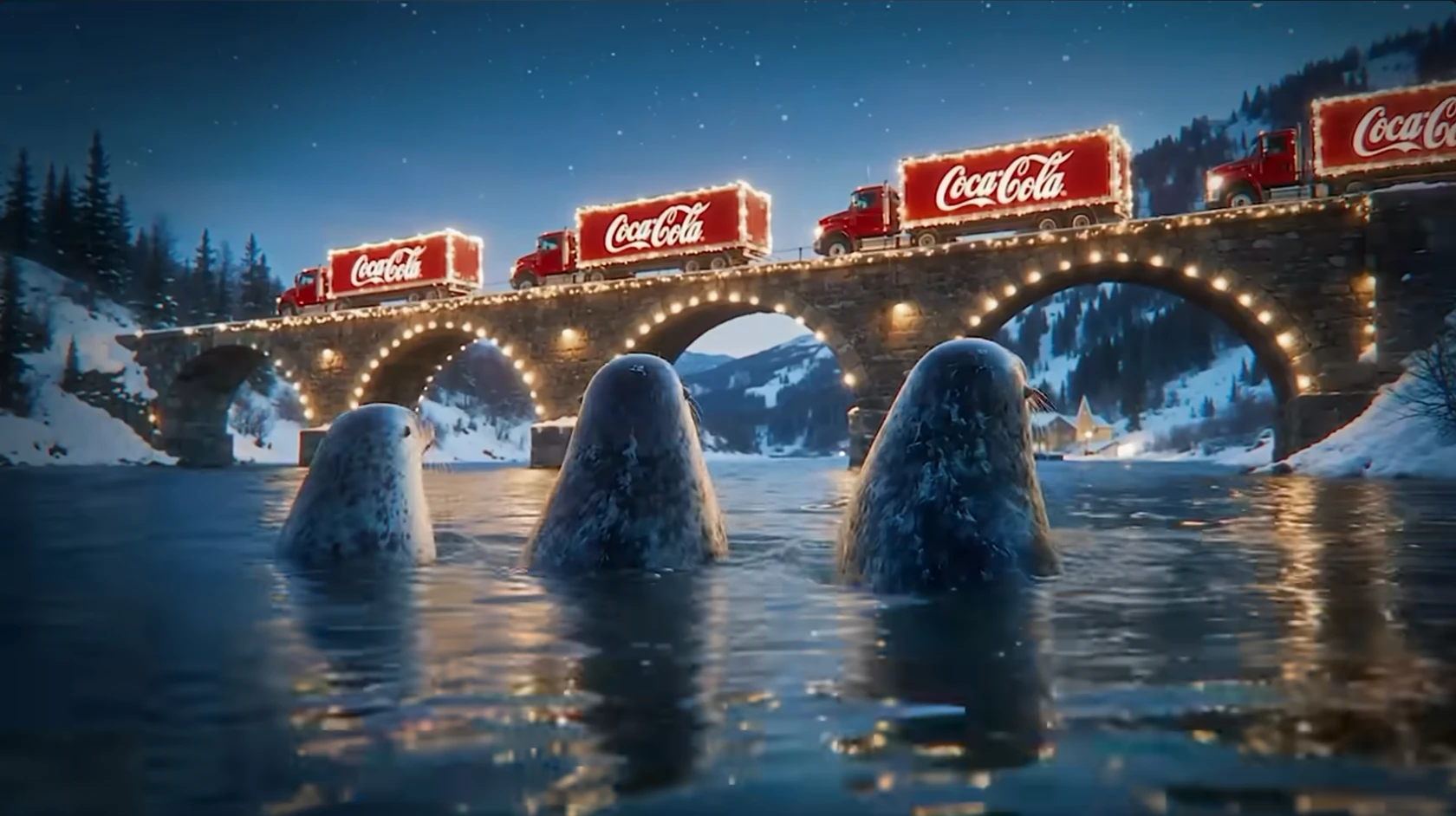
Coca-Cola. In 2025, the company again used AI in its holiday campaign, reimagining its familiar Christmas truck imagery. The response was mixed, but the brand continued to experiment. This shows how a major company may intentionally choose a scalable tool even while its reputational implications remain contested.
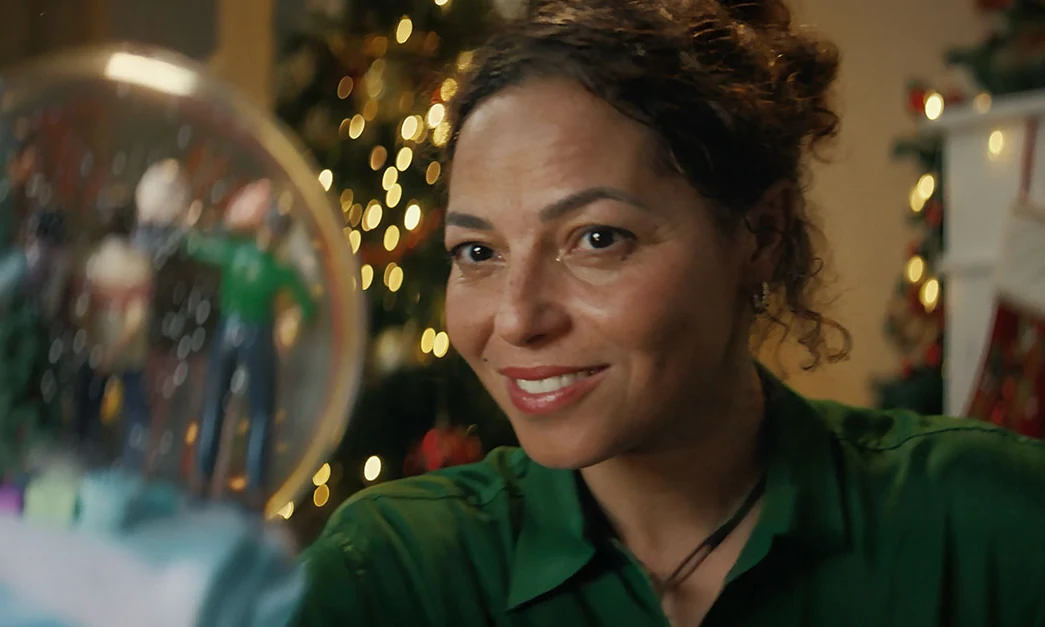
McDonald’s, Netherlands. In December 2025, the chain released a fully AI-generated Christmas film about holiday chaos, then removed it following a backlash. The objections concerned more than the technology itself: viewers also challenged the idea and emotional tone. Technology cannot be judged independently of what an ad is saying.
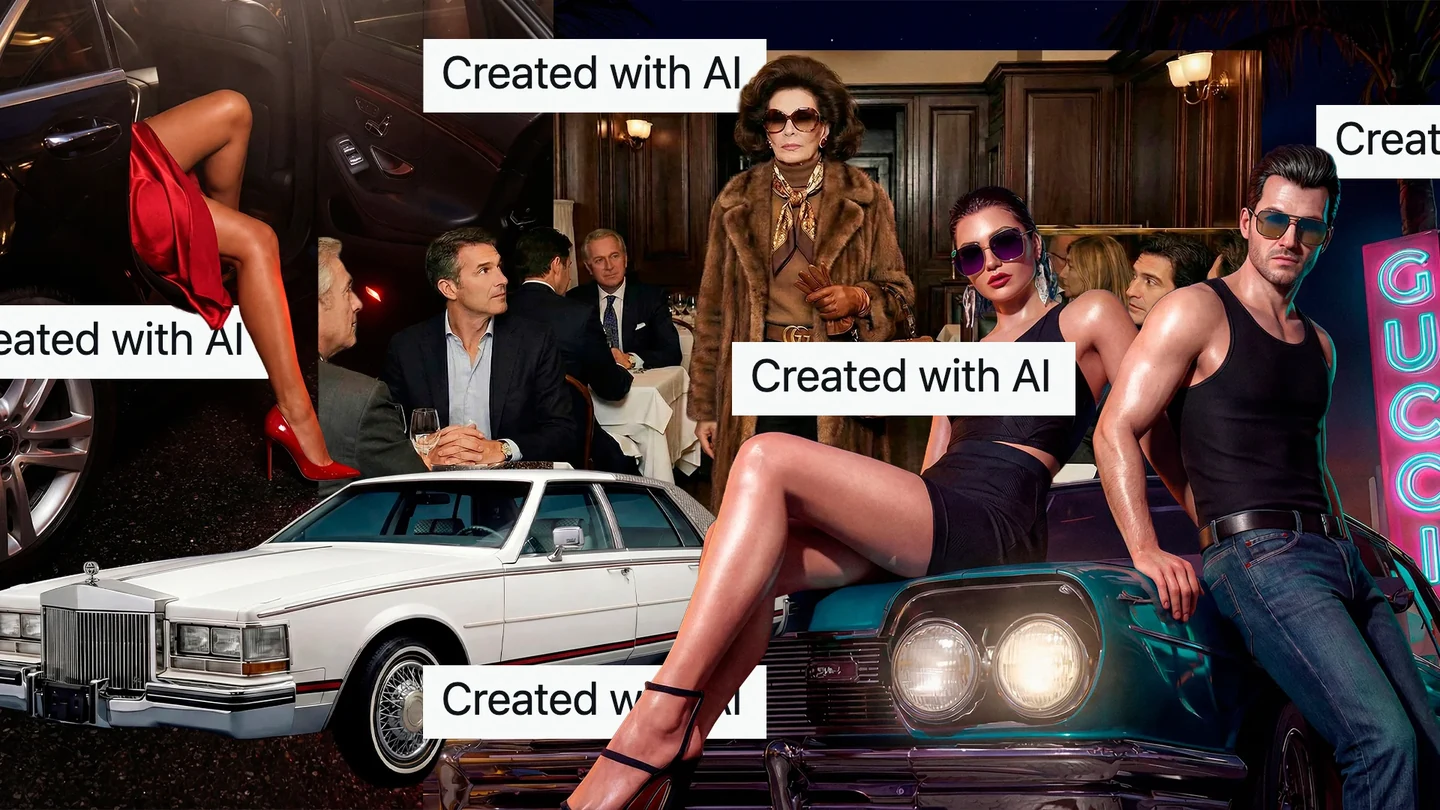
Gucci. This example goes directly to the question of luxury. In February 2026, Gucci published AI-generated images to promote a fashion show, openly labelling them as such. Some viewers considered the images cheap and inconsistent with the house's heritage. At the same time, the experiment could have been intended to project technological boldness. That tension matters: the same tool can signal modernity and undermine a sense of exclusivity.
Research offers further context. In a Journal of Advertising Research paper covering three experiments, researchers found that disclosing AI use in luxury advertising could make the imagery seem lower-effort and the brand less authentic. That penalty was reduced when the AI-generated imagery was genuinely creative.
Producing an impressive image quickly is no longer the same as creating visual value.
Where AI can really improve production
I don't believe generative tools will disappear from professional workflows. Their role may instead become more practical. In my view, the strongest use cases are before the final production stage and in precise refinements afterwards.
Pre-production. Concept development, storyboards, visual direction, rough animatics, and early lighting and composition studies. At this stage, every pixel doesn't need to obey perfect physics. The goal is to communicate direction, discuss decisions with the client, and decide where to invest resources.
Production. Direction, filmmaking, CG, animation, and art direction remain essential for controlling the final result. When product geometry, logos, character consistency, complex actions, and multiple rounds of revisions matter, shot control can be worth more than the speed of the first generation.
Post-production. AI can assist with targeted fixes, environment extensions, cleanup, individual VFX elements, and auxiliary versions. Here, it serves the project rather than attempting to replace the entire workflow.
AI across the production process
- 70%
PRE-PRODUCTION
Concepts, storyboards and previs
- 10%
PRODUCTION
Direction, CG and filming
- 20%
POST-PRODUCTION
Cleanup, VFX and targeted refinements
Fully AI-generated ads won't disappear
It would be simplistic to say that no one will make fully generated commercials in a few years. High-volume campaigns, social media, fast product tests, and short-lived content will rely on them increasingly. In these settings, speed, cost, and the number of options may genuinely matter more than exclusivity.
There will also be distinctive, author-led projects where generation becomes a deliberate artistic language. A strong concept does not lose value simply because AI was used. But its quality comes from direction and taste, not from the accessibility of a Generate button.
My prediction
I expect the market to split. For high-volume content, AI will become a normal way of making videos. For more demanding commercial projects, its value will appear less in the finished image and more inside the workflow: faster exploration, better preparation, and precise refinements.
Premium brands will continue to depend on a distinctive visual signature — something that cannot be copied automatically through a popular prompt. So I don't see the future of premium production as rejecting AI. I see it as knowing how to use AI without allowing it to replace the concept or the identity.
Generation will make images easier to produce. It won't, by itself, make a brand unique.
Comments